
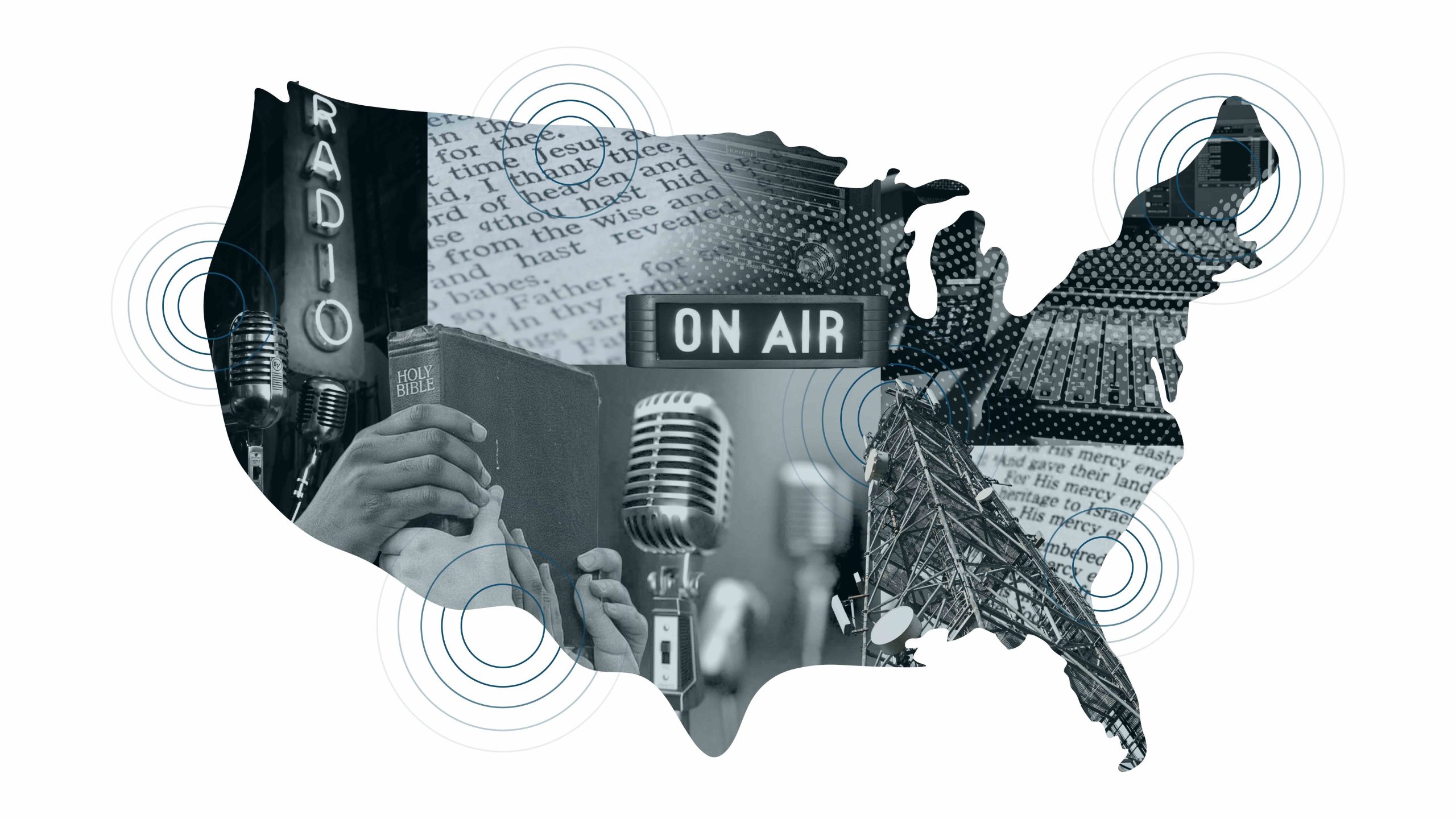
A new national study from the Pew Research Center offers one of the most comprehensive looks in years at the scale and influence of religious radio in the United States, revealing a medium that remains both far-reaching and deeply woven into the fabric of American life.
The report, Religious Radio Across America, highlights just how extensive that footprint is. Faith-focused programming is not a niche corner of the dial—it represents a substantial portion of it.
Roughly 25% of all AM and FM radio stations in the country are dedicated to religious content, a figure that underscores the enduring presence of spiritual broadcasting even as media consumption habits continue to evolve.
Equally significant is the medium’s accessibility. Nearly 98 percent of adults in the United States live within range of at least one religious radio station. This near-universal reach positions religious radio as one of the most accessible forms of faith engagement available today, rivaling even digital platforms in its ability to connect with audiences across geographic, economic, and demographic lines.
Beyond sheer reach, the study reveals important patterns in listener motivation. It shows that audiences are not primarily drawn by headlines or partisan debate. Instead, they consistently gravitate toward content that offers encouragement, spiritual nourishment, and practical insight for daily living. Listeners are looking for voices that provide reassurance, address real-life concerns, and foster a sense of connection, a feature unrivaled by local radio.
The study also points to an important generational shift that broadcasters should not overlook. Younger audiences engaging with religious content are more likely to turn to streaming platforms and podcasts rather than traditional AM/FM radio, signaling a broader evolution in how faith-based programming is consumed. This reinforces the growing importance of a hybrid approach, one that integrates over-the-air broadcasting with digital distribution.
As listeners increasingly move between radio, on-demand audio, and streaming services, stations that recognize and adapt to these blended habits will be better positioned to extend their reach and maintain relevance with the next generation.
These findings show that the strength of religious radio lies not only in its distribution, but in its distinct identity. In a crowded media landscape, its value is rooted in trust, consistency, and purpose-driven content. The study suggests that maintaining this identity, rather than mirroring the tone or priorities of other media sectors, will be key to long-term relevance. Overall, it makes clear that religious broadcasting is well positioned to thrive, especially as it embraces new ways to reach audiences however they listen.
NRB members, click here to join us for a live conversation with Pew Research Center on Tuesday, April 7.

Jack Creel was a policy analyst at NRB.